Potassium Sulphate for Crops: Fertilizer Buyer Guide
Why Chloride-Sensitive Crops Need Potassium Sulphate
Potatoes, tobacco, grapes, citrus, avocados, tea and a long list of horticultural crops are chloride-sensitive. When growers apply muriate of potash, the chloride ion can reduce yield, lower tuber dry matter and degrade fruit quality. Potassium sulphate fertilizer solves that problem by delivering potassium without the chloride load, making it the preferred source for premium and export-oriented production systems where quality is priced.
Understanding the Agronomic Role of Potassium
Potassium regulates water relations, enzyme activation, photosynthesis and the transport of sugars within the plant. Adequate potassium improves stress tolerance, disease resistance and the quality attributes that buyers pay for, such as brix, firmness and shelf life. In chloride-sensitive crops, potassium sulphate for crops provides this essential nutrition while keeping salt index manageable, protecting soil biology and avoiding chloride accumulation in fruit and leaf tissue.
Sulphate Sulphur: A Hidden Bonus
Potassium sulphate also supplies sulphate sulphur, an essential nutrient that is often overlooked. Sulphur is a component of amino acids, proteins and glucosinolates, and it improves nitrogen-use efficiency and oil content in oilseeds. In many soils, sulphur deficiency is becoming more common as atmospheric deposition falls. Using SOP delivers potassium and sulphur together, which is why agronomists increasingly recommend sulphate potash in balanced fertility programmes.
Granular SOP for Fertigation and Blending
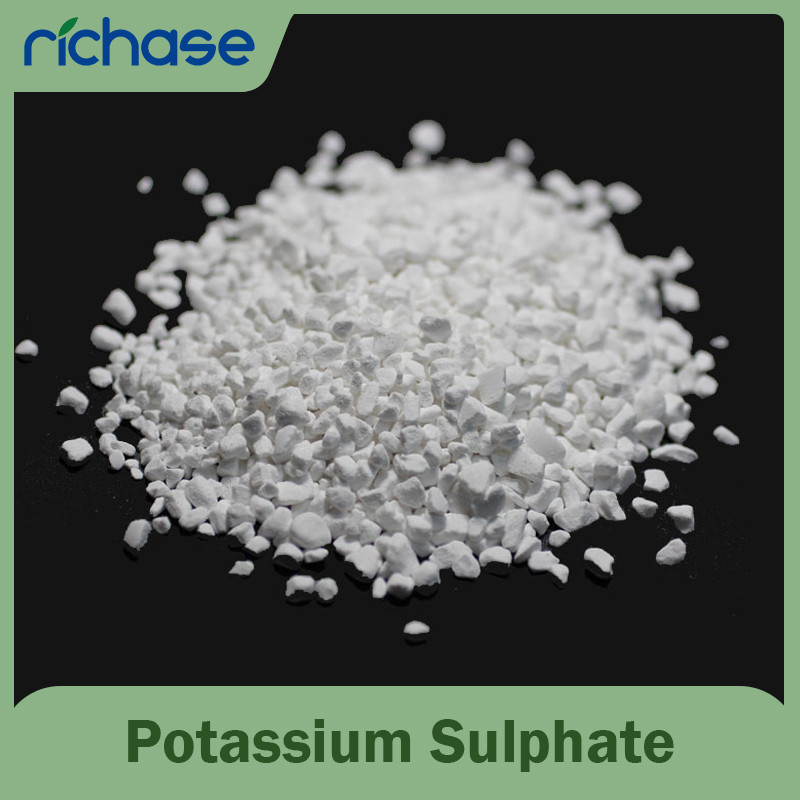
Buyers choosing potassium sulphate granular gain flexibility across application systems. Uniform granules blend evenly with other dry fertilizers for broadcast and banded application, while the same product can be dissolved for drip and sprinkler fertigation where the water chemistry permits. Consistent granule size and low dust reduce segregation in blends and improve application uniformity, both of which matter in high-value cropping.
Standard vs Soluble Grades: Picking the Right Form
Not all SOP is the same. Standard granular grades suit soil application and dry blends, while fully soluble crystalline or micronised forms are better for fertigation, hydroponics and foliar feeding. Buyers should match the physical form to their application system. If you are planning fertigation, confirm the product's dissolution rate and insolubles content; for dry blends, check granule size distribution and hardness to avoid dust and segregation.
Application Rates and Timing
Optimum potassium sulphate rates depend on soil test results, crop removal and yield targets within a balanced crop nutrition potassium plan. A general guide is to split applications across the season, matching potassium supply to peak demand windows such as tuber bulking, fruit fill or boll development. Because potassium is mobile in the plant, deficiencies usually show first in older leaves. Regular tissue testing helps growers fine-tune rates and avoid both deficiency and luxury consumption.
Quality Parameters for Procurement
When sourcing, verify the K2O content, sulphate sulphur level, chloride content, moisture and granule size distribution. Certificates of analysis per lot, low chloride guarantees and consistent physical quality are the hallmarks of reliable supply. Buyers in premium markets should also confirm freedom from heavy metals and adherence to regional fertilizer regulations, particularly for organic-compatible certification where applicable.
Economics: When SOP Is Worth the Premium
SOP typically costs more per unit of K2O than MOP, but the economics change in chloride-sensitive crops and premium markets. Higher pack-out rates, better grade-out, improved storage quality and access to high-value export markets often repay the premium many times over. Calculating the value on a per-hectare, quality-adjusted basis rather than a per-tonne basis is the correct way to evaluate sulphate potash for your system.
Richase Supply Support
Richase Group Limited supplies potassium sulphate fertilizer in granular form with consistent quality, chloride control and full export documentation. Our team helps growers and distributors match the right grade to their crops and application systems, and supports sampling before commitment. If you are evaluating potassium sources for chloride-sensitive production, we can help you secure dependable SOP supply.
Final Checklist for Buyers
Confirm the K2O and sulphur analysis, chloride guarantee, granule quality and packaging options. Request per-lot certificates of analysis, trial a sample in your application system, and agree on delivery schedules that match your planting window. With the right product, the right grade and a reliable supplier, potassium sulphate fertilizer becomes a dependable tool for protecting yield and quality in chloride-sensitive crops.