Soil Carbon Push Lifts Humic Acid Demand
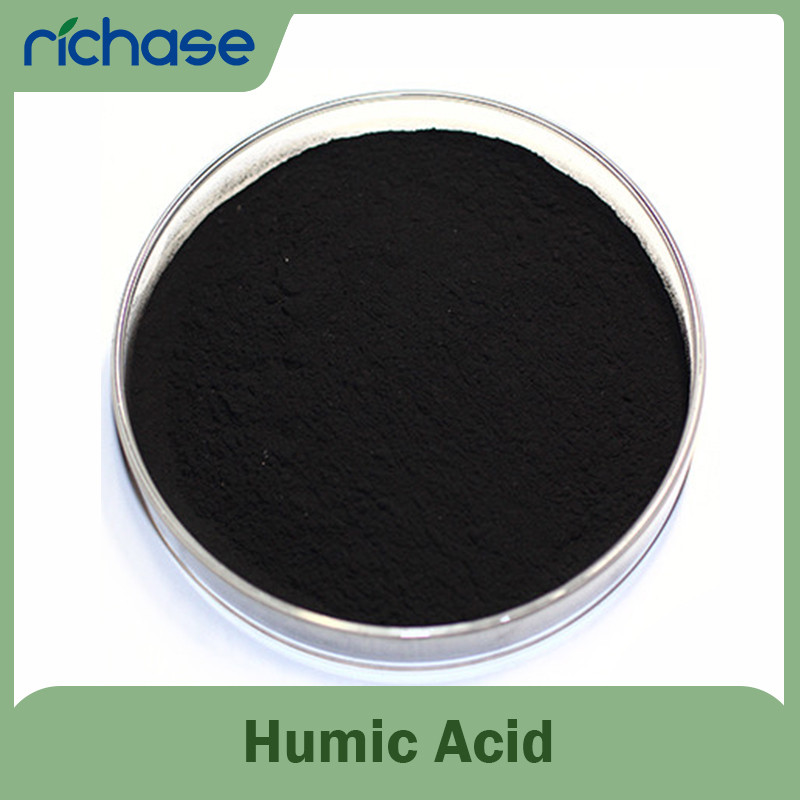
A quiet structural shift is reshaping the global soil-inputs market. As governments and food companies put a price on the carbon stored in farmland, Humic Acid is moving from a discretionary soil conditioner to a revenue-generating climate asset. For buyers and blenders across agriculture, that change is already altering procurement, pricing, and product positioning. This update tracks the market, policy, and regional moves driving the shift.
Market Snapshot: Humic Acid on a Steady Climb
Independent market research puts the global Humic Acid market at roughly 0.91 million tons in 2025, climbing toward 0.96 million tons in 2026 and an estimated 1.52 million tons by 2035 at a compound annual growth rate near 5.3 percent. Revenue estimates are more ambitious, with several analysts forecasting the category reaching between 1.0 and 2.1 billion US dollars by the early 2030s, propelled by sustainable-farming mandates and biostimulant recognition. The direction of travel is clear: humic substances are becoming mainstream, not niche.
Soil Carbon Programs Turn Humic Inputs Into Climate Assets
The biggest catalyst is soil carbon. Government agencies now quantify soil organic carbon as a tradable metric, which reframes humic products from a cost center into an income stream. In the United States, USDA Practice Code 336 reimburses growers who raise soil organic matter with compost or biochar. European carbon programs assign credits to measurable gains in soil carbon stocks. Financial institutions increasingly bundle those credits into green-finance products, broadening access to capital for input purchases. As verification protocols sharpen, audited traceability becomes a product differentiator.
Regenerative Agriculture Drives Structural Demand
Regenerative agriculture emphasizes microbial activity, permanent ground cover, and diversified rotations, all of which thrive when humic substances lift cation-exchange capacity and feed the root-zone microbiome. India illustrates the institutional momentum: its National Mission on Natural Farming backs thousands of bio-input resource centers targeting large acreage for adoption, ensuring stable offtake for local producers. In North America, food companies commit to regenerative acreage targets and embed humic inputs in supply-chain contracts that pay premiums to compliant growers. Demand becomes structural rather than seasonal.
Policy Tailwinds: EU and USDA Recognition
Regulation is formalizing the category. The European Union's Fertilising Products Regulation, EU 2019/1009, explicitly classifies humic acids as eligible plant biostimulants, unlocking a single market of 27 member states and creating a compliance-driven demand floor. The EU Green Deal and Farm to Fork strategy add a binding target to cut synthetic fertilizer use by 20 percent by 2030. In the United States, USDA organic-incentive frameworks and technology firms integrating soil-health dashboards into farm software translate lab organic-carbon data into repeat-purchase dosing guides.
Asia-Pacific Emerges as the Fastest-Growing Region
While Europe leads on value, soil health demand is accelerating fastest in Asia-Pacific. China and India anchor volume expansion through large smallholder populations, national organic programs, and rapid scaling of aquaculture and protected agriculture across ASEAN. Latin America links humic inputs to large-scale soybean, maize, sugarcane, and coffee systems, where they improve nutrient uptake under variable rainfall. For exporters, that means procurement interest is broadening well beyond the traditional European buyer.
Liquid Formats Gain on Fertigation
Form matters for margin. Powdered humic acid remains the volume leader because it blends cheaply with granular NPK and organic fertilizers. But liquid concentrates are the fastest-growing segment, expanding at a mid-single-digit to low-double-digit CAGR as drip irrigation and precision spraying spread. Liquid potassium humate integrates seamlessly into fertigation, delivering stimulants straight to the root zone with minimal labor, and commercial growers accept the premium because trials consistently show yield lifts of 8 to 14 percent.
Quality and Traceability Become Differentiators
The category faces a credibility problem: colorimetric tests and divergent extraction protocols can make humic readings vary by up to 40 percent, letting synthetic urea blends masquerade as concentrates. Premium brands respond with QR-code traceability and third-party lab certificates, though scale-up of these safeguards remains uneven. For buyers, the practical lesson is to specify verified humic content and request documentation, because audited consistency is fast becoming the line between a trusted supplier and a commodity trader.
What This Means for Growers and Buyers
For growers, the shift is an opportunity: practices that improve soil carbon can now earn credits while raising yield. For blenders and distributors, it is a prompt to secure consistent, documented supply before demand tightens and to consider liquid and chelated formats for precision markets. For everybody in the chain, traceability and agronomic validation are moving from nice-to-have to table stakes as regulators and buyers scrutinize claims more closely.
How Richase Reads the Shift
Richase Group Limited supplies Humic Acid and potassium humate backed by ISO, SGS, CIQ, Intertek, and CCIC documentation, with annual capacity in the hundreds of thousands of metric tons and direct access to Tianjin, Shanghai, and Qingdao ports. As soil carbon and regenerative programs convert humic inputs into climate assets, we are investing in batch-level testing and OEM packing so global customers can meet tightening traceability expectations. Review specifications on the product page: Humic acid / Potassium humate.
Conclusion
The convergence of soil carbon finance, regenerative agriculture, and formal biostimulant regulation is lifting Humic Acid from a niche amendment to a structural input. Buyers who secure documented, consistent supply now are best positioned as the category scales through the next decade.